Adversity will happen It’s guaranteed. The more important and interesting question is how will you choose to engage with it. What will you do to turn adversity into a learning opportunity? Anyone who has ever been a caregiver to someone has faced great strain. This spring, I embarked on a journey that no one “chooses” but also one that over 44 million Americans are on currently. As a beloved, childless, widowed uncle embarked into a cancer journey, my husband and I choose to step up. As the closest (and healthiest) family member, I was the most obvious and able person to assume the role of caregiver. In the process, I learned more about adversity and what it means to engage with it than I imagine possible.
4 Things that Happen When you Navigate Undesirable and Stressful Experiences
You see the core character of those around you. Who they are, what they believe, and how they live—all these things quickly come into view. Let’s face it, stress, illness and uncertainty do not bring out the best in most people. In my experience, as a professional psychologist and as family member, stress, illness and uncertainty can strip us to our core and reveal who we are. Many speak decisively of how they want to help, but few show up. Many people disappear. Some who do show up aren’t pretty.
But the experience is not necessarily negative. For everyone who disappoints, there are others who come through. During the experience of caring for my uncle, my husband’s core character was revealed. I am profoundly grateful to see yet again who he is, what he values, and how much he loves, respects and supports me.
You reconnect to what matters. Most people I know have more than they want to do than there is time in the day. We are all forced to make chooses. Adversity and caring for a loved one presents a new opportunity to focus on what matters most, who matters most and why we exist.
You find new fortitude within. As we juggled caring for an aging and sick relative with our existing work and childcare demands, volumes of responsibilities landed on our plate. I needed to find new energy sources. Rather than reaching for a snickers, you have to dig deep. There is strength to muscle through the long days, to juggle the extra demands, and to get everything done. I found it harder to manage my own perpetual stress as I was trying to think through all the questions, anticipate different scenarios, and manage my uncle’s care.
During the longest days, I felt most connected to my father. Even though my father has been dead for almost two years, I felt his loving presence stronger than I had in months. I knew that he is profoundly proud of how I was showing up and loving his brother and his best friend.
Compassion comes from unexpected places. As my uncle’s “point person,” I was committing to keeping his inner circle of friends current on his status and his needs. Over several months, I forged friendships with people I have never met but with whom I shared a common love—a love for my uncle. Interestingly, the greatest compassion and appreciation that I received for my efforts came from this group of faceless friends.
Did I encounter adversity caring for my uncle? Absolutely. The process was exhausting, demanding and punctuated by events that one can never schedule or control in advance. Over the course of the treatments, however, I also grew and so did those closest to me. Source: https://www.huffingtonpost.com/entry/adversity-an-opportunity-_b_11764794.html
“How do you do it?” my friend asked me one day over coffee. “You’ve had some awful stuff happen to you over the years, but you’re still so cheerful. What gives?” My friend was right, my life had been rough at times. I’d gotten divorced and I’d been laid off a couple of times within a five-year period. I should have been angry and bitter, but I wasn’t. I was still looking forward to each new day and the possibilities ahead of me. While this was normal for me, my friend’s comment made me realize that not everybody felt the way I did. Why was I so optimistic, anyway?
The Definition of Optimism Optimism comes from the Latin word optimus, meaning "best," which describes how an optimistic person is always looking for the best in any situation and expecting good things to happen. Optimism is the tendency to believe, expect or hope that things will turn out well. Even if something bad happens, like the loss of a job, an optimist sees the silver lining. For me, getting laid off was the catalyst that allowed me to start my own business. As I packed up my office, my mind was already whirling with the possibilities ahead. Without that push, I may never have made the leap to self-employment. Losing my job was a good thing after all. The emerging field of positive psychology studies the positive impact that optimism has on mental health. Other research shows that optimism may be good for my physical health too—optimists are sick less and live longer than pessimists. Apparently, a positive outlook on life strengthens the immune system (and the body's defenses against illness), cardiovascular system (optimists have fewer heart attacks), and the body's ability to handle stress. Happiness through Positive Thinking Being an optimist or a pessimist boils down to the way you talk to yourself. Optimists believe that their own actions result in positive things happening, that they are responsible for their own happiness, and that they can expect more good things to happen in the future. Optimists don’t blame themselves when bad things happen. They view bad events as results of something outside of themselves. I didn’t blame myself for losing my job, but saw it as a business decision that had nothing to do with me personally. Pessimists think the opposite way, however. They blame themselves for the bad things that happen in their lives and think that one mistake means more will inevitably come. Pessimists see positive events as flukes that are outside of their control—a lucky streak that probably won’t happen again. Because of their thought processes, optimists have much brighter futures. A bad circumstance or event is taken in stride, viewed as a temporary setback—not a permanent way of life. Even if something bad happens today, a positive thinker believes that good things will come again in the future. Optimists tend to share several other positive characteristics that increase overall happiness and promote health, while reducing depression and chronic stress:
They think about, reflect on, and emphasize the good things in life.
They are grateful and thankful for all their blessings.
They don’t complain when something bad happens.
They feel that nothing can hold them back from achieving success and reaching their goals.
They believe in abundance.
They are confident that the world offers plenty of opportunities for everyone to succeed.
The Power of Positive Thinking: Change Your Thinking, Change Your Life Luckily, you can change your thinking patterns over time. Even a pessimist can become an optimist with enough practice! All you need to do is to reframe how you define events. Instead of dwelling on the bad experience, analyze it to figure out what good can come of it. Even if a project at work is deemed a failure, think about what you learned during the process. What strengths did you discover within yourself, and when can you use those talents again? Instead of blaming yourself for the failure, think about the outside influences that may have affected your project. Maybe you were delayed by outside vendors, so you couldn’t meet a deadline; or management decided to go in another direction, making your project redundant. Virtually any failure can be turned into a learning experience, which increases your potential for success in the future. Optimism is a skill of emotional intelligence, which translates to a better career and greater success in life. Life is too short to be miserable, so start turning your thinking around! The power of positive thinking can advance your prospects for work, relationships and other life experiences.
I've been trying to work out how any process of personal growth and improvement, or recovery from times of adversity can be mapped out into phases. When we're on a personal journey it's often discouraging to feel overwhelmed and not know where you are and how far you have yet to go. That's how I've felt lately. In this video I've outlined the phases that I believe I've been passing through from Ignorance, through to Enlightenment and everywhere in-between.My thinking on this has also been prompted by reading the amazing book '12 Rules for Life' by Jordan B. Peterson. If you feel inclined I can't recommend it highly enough.You can find a copy at https://amzn.to/2u6QHUUIf you'd like to receive the occasional message from me containing thoughts, information or inspiration related to living a better life after divorce, you can join my mailing list at the following link:http://bit.ly/Choosing-to-ThriveThanks and have a great day!
In this video I want to share my 5 top tips for thriving through adversity.
Whatever the challenge you may be facing, I believe the same key principles and steps can be applied to help bring you through it successfully; whether struggling through divorce, or facing challenges in your business or personal life the same methods apply and will help.
If you're interested in learning more, and hearing thoughts on other ways in which we can tackle adversity and rise above challenge, I'd love to share with you my new podcast: Kintsugi Life.
I have set before you life and death, blessings and curses. Now choose life, so that you and your children may live. (Deuteronomy 30:19)
We are born into a world that is not of our making. We are given a place to grow up, parents, a family, a home, neighbors, teachers, friends—and an era in which we evolve. We don't get a choice in so much that really counts. Are you good looking, ugly or in the middle? Are you smart, challenged or just different? Are you tall, short—skinny, heavy—charismatic, marginalized—befriended or alone? Are your parents happy or even together? Do you have a brother or sister that you are close to - or are you bullied relentlessly? Are you born into a time of peace or a time of war, a time of impoverishment or a time of plenty, a time of faith or a time of cynicism? If you take a deep breath and look at the circumstances of your early life, you will have to see that the whole project is essentially unfair. Some people are born into riches of all kinds, while others are burdened from the very beginning. Then you live your life. You make decisions, meet people, and navigate through school and more. We all try. It is absurd to call people lazy. But some certainly have a harder time than others. With luck, someone loved you. Someone believed in you and in turn, you began to believe in yourself. If you were a more sensitive soul, you may have been injured by the numerous selfish people that you met along the way; and they are everywhere (welcome to the human condition). Some of these wounds can last a lifetime, leaving you feeling stupid, unwanted, second best and so on. If you were what E. James Anthony called The Invulnerable Child, you were able to pull yourself up from nothing and make something of yourself: look at Presidents Clinton and Obama, two men who had weak paternal support and nonetheless, perservered. There are so many stories and your unique life is one of them. Radical Acceptance is a gift—and I want to offer it to you. We must accept what happens to us. That doesn't mean that we like it or that it is fair. Life is not fair. If you are in the midst of a divorce, you gave up so much to make your marriage work. It didn't. If he left you, then you are probably holding a bag of resentment and hurt. If you left him, you've been grieving the loss of your marriage for some time. It is a big loss. We all want to rage at the world, or crawl into a depressed spot when we feel the injustice and randomness of our pain. article continues after advertisement
Or perhaps you were traumatized by an accident, an illness, a corrupt business deal, a rapist, the death of a child, Mother Nature. All this happens in this world and it may happen to any of us. As we age we grow wiser as the invincibility of youth is supplanted by the vulnerability of maturity. Kids simply don't know how precious happiness really is. It is a golden moment to be celebrated and cherished. And when you have love, grab it. I often say to my patients, "Grab the good, because the bad will surely find you." When injured by others or by circumstance, I encourage you to feel it all; the outrage, the hurt, the questioning of your Maker, the fear of what will be coming next—if anything. This is grief work and it is a necessary part of healing. It is the spiritual equivalent to the body slowly healing a bad wound. It starts off in pain, and then remains tender, and when protected and soothed, a wound eventually heals. And scars are a sign that the body did its job. Grief brings you through pain to disbelief, to anger, to "only ifs" to profound sadness, to loss - and then to acceptance. It gets triggered again and again, like tsunamis of anguish that take you over when you least expect it. But, over time grief does get worked through. The wound heals, even if imperfectly. We are left with acceptance - and I would like to argue - Radical Acceptance. It's a good thing. There is something about the human condition in that we tend to hold onto bad memories more than good ones. We have sayings like, bad news travels ten time farther or faster than good news. It is probably evolutionary, because when survival was at stake, ancient homo sapiens had to remember where danger lurked. Their very survival depended on it. So, remembering the bad had value - but in the twenty first century, this quality provides us with too much pain and it is not worth it anymore. (Post Traumatic Stress Disorder is a dramatic example of this biological safety mechanism gone terribly wrong.)
Radical Acceptance means that you understand that bad things do indeed happen to good people - and all the time. You can stay mired in your sense of injustice and self righteousness. You can develop an entire personality around your victimhood. But what purpose does it provide? An identity fueled by hurt and rage is a soul that is preoccupied by control and not love. You lose a second time because you become a victim of your own victimhood. And, in the worst case, you can become part of the problem. Very often, it was an injured soul or group that hurt you in the first place. A cycle of victims and oppressors does our species little good. We must accept. Not in the classic Buddhist sense of non attachment. We should be attached. A wrong is a wrong; and it needs to be righted if possible. But we must start with the understanding that what happened to us is part of the quixotic human condition. From acceptance comes clarity - and from this place, you will be more able to make a difference. If you were married to a narcissistic man, for instance, mourn the loss that you may never have really been loved. Get over it, because you will have to coldly deal with his manipulations—and your outrage will only play into his charismatic hands. If your older sister was preferred by your father because she was beautiful and you were just smart, get over it. Let go. Radically accept your father's stupid (but human) mistake. It cost you. No question. You are angry and perhaps have a chip on your shoulder. Forgive and grieve the father that you wish you had. He was just coarsely human - like most of us. This kind of acceptance is the end stage of healthy grief - it will probably make you easier to live with - and give you much needed peace. Radical Acceptance is an evolutionary good - if not a spiritual good as well. Most of us don't have to worry about wild beasts attacking us. We can learn from our misfortunes. We just don't want to be irreparately damaged by them. To accept means to see things clearly. It reinforces the notion not to give a second chance to someone who doesn't deserve it. You don't have to walk around feeling like a victim in order to protect yourself.
You see, acceptance doesn't mean passivity. It means freedom. Let there be a blessing for us all to be free to see the world as it is, with its dangers—and its gifts. Grieving our losses is only a first step towards the wisdom of enjoying what is to be enjoyed. Most of us have blessings if only we permit ourselves to see them. Ironically, as we shed our expectations we become lighter and more open to every moment that we live.
Although life isn’t easy, whether it’s been good or bad, everything is a part of the journey. These are the experiences and lessons that we are to draw strength from and build upon to help us in our future. There isn’t a handbook warning us of the plight and pain we will face, but there is a solution.
The solution is this: work to overcome adversity instead of falling prey to them. I know what you’re thinking: sounds easy, but how do you do it? My Experience Overcoming Adversity Three years ago, my life was wonderful. My children brought a light to my life that could never burn out and my marriage carried as much joy as one possibly could have. I had forgiven the people that caused the painful situations in my childhood and let it all go. I spent my time inspiring others to do the same so they could focus on what was important.
And then, things changed. I was diagnosed with multiple brain aneurysms and my life changed forever, for the better. I’ve definitely had my share of experience overcoming adversity. When I encountered a new situation that seemed completely devastating, I began to reflect on the strength that was born inside of me out of the very pain I was experiencing. There came a point when I accepted a fact of life: that just because you experience trauma, pain, and negative situations that leave a deep scar across your heart, doesn’t mean they should hold you back. After all, there will be more hurdles to jump. It’s how you decide to handle it that will make the difference in your future. But how do you reframe the way you handle difficulties in life? There are steps you can take so that overcoming obstacles can be possible for you. Tips On Overcoming Adversity 1. Have faith in yourself Faith is required when overcoming adversity. Believe you can by telling yourself, “I am going to overcome this.” Your state of mind is more important than the situation, because that is where courage, strength, and miracles are born. 2. Know you have nothing to lose Faith is powerful when you truly believe – so believe, as you have nothing to lose except worry, fear, and things you can’t control. You just need to get over this hurdle. 3. Remember: this isn’t the end Understand that whatever you are faced with is a part of life’s experiences, and it won’t be the first nor last. Use it to cultivate a stronger version of you. The Takeaway I didn’t know about all of the challenges I had awaiting me, but I wasn’t afraid to face them or fight. Overcoming adversity can give you even more faith, strength, courage and a desire to make your life count. Let your obstacles give you yet another reason to appreciate your life, along with everything in it. Source: https://inspiyr.com/strength-courage-overcoming-adversity/
Bad news can shake our beliefs. Here are 5 tips to get back on track.
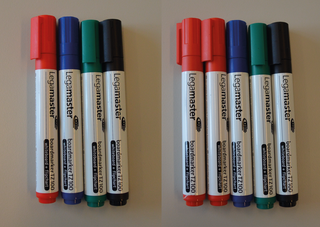
We are meaning-makers. We like things to make sense. We believe in religions that provide an account for why the world is the way it is. We pursue goals that fit our conceptions of ourselves in the world. We even prefer things that “make sense” to things that don’t: for example, a marker set with a single pen of each color, as opposed to a set with an extra red pen (i.e., the set on the left as opposed to the set on the right— even though the one on the right has more pens total).
Source: Sarah Cotterill
But what happens when things don’t make sense? When one’s sense of meaning in life is jeopardized after, for example, a traumatic or unexpected event? After a mass shooting, or the death of a loved one, or a life-threatening diagnosis?
When meaning is already there—when the world already seems to make sense—there is no need to use our cognitive resources to search for it. But when meaning doesn’t come to us effortlessly, we use effort to find it. Traumatic events trigger a more deliberate search for meaning precisely because they often don’t fit with one’s existing views of the world or one’s sense of self in the world. And psychologists have known for many decades now that people find the experience of dissonance—when things don’t fit together in our minds—distressing. For example, we don’t like it when our attitudes aren't aligned with our behaviors (e.g., “french fries are bad for me, but I still eat them”)—to the point that we typically either change our attitudes (e.g., “I read somewhere that the potato has gotten a bad rap”), or our behaviors (e.g., quit eating french fries altogether).
The same is true for events that shake our worldviews—it can be frightening and uncomfortable to think that the world maybe isn’t as we envisioned it. And the literature points to a few strategies we use (consciously or unconsciously) to resolve those discrepancies—to make that discomfort go away.
Here are five examples:
1. First, we often reconstrue the meaning of the event so as to fit into our existing worldviews—what is called assimilation. For example, in the aftermath of his cancer diagnosis, Jimmy Carter, a devoutly religious man, has publicly relied on his faith to help him make sense of his illness—what he calls his “latest adventure in life.” And a fellow member of his church congregation said this about his cancer: “When you get into a tough situation and you don’t know what God’s plan is, you should bow the knee.”
The critical part here is that cancer did not cause Carter nor his friends to revise their faith- in fact, it seems to have deepened it. They are hoping to understand how cancer fits into the plan for his life.
2. We also often change our worldviews to take into account the event—what is called accommodation.
We might conclude, for example, that while there is much good around us, the world is not as predictable as we might like to believe. That does not mean we have to adopt a pessimistic mindset. Rather, simply acknowledging that there is good and bad in the world might mean that when the bad does crop up it doesn't generate quite the same dissonance. (Incidentally, we also know that aspects of the brain respond more strongly to surprise than to the actual amount of “badness” wrapped up in any given event: the bad event you, to some extent, expect does not feel as unpleasant as the same event that you don’t see coming).
3. We engage in what’s called social comparison—reminding ourselves that, in certain respects, we might still be better off than many people in the world. Jimmy Carter also said, following his diagnosis, “I’ve lived a very good life.” In doing so, he seems to imply that there are others who have been less fortunate to this point—both a "prosocial" sentiment, and one that perhaps allowed him to feel more at peace with his own diagnosis. 4. We even engage in comparisons with ourselves. We might emphasize the fact that we’ve dodged outcomes even worse than the one’s we’ve been dealt—for example, cancers that could have been caught at later stages, or accidents that could have been more serious.
5. We often "reappraise" the event: we might search for silver linings—to see if we can find any good that has come out of a bad thing. For example, it is common to hear people (including myself) say that a certain traumatic event allowed them to become closer with their friends and family.
Through these processes, we often restore—and sometimes even enhance—our sense of meaning in life.
Oliver Sacks, on learning of his own cancer diagnosis, wrote in the New York Times, “Over the last few days, I have been able to see my life as from a great altitude, as a sort of landscape, and with a deepening sense of the connection of all its parts. This does not mean I am finished with life. On the contrary, I feel intensely alive, and I want and hope in the time that remains to deepen my friendships, to say farewell to those I love, to write more, to travel if I have the strength, to achieve new levels of understanding and insight.” The idea that enhanced well-being can come from trauma is taken up in the literature on what’s called post-traumatic growth—and will be the topic of a later post! Source: https://www.psychologytoday.com/us/blog/the-science-adversity/201606/5-ways-find-meaning-in-life-following-adversity -- Heintzelman, S.J., King, L.A. Meaning in life and intuition. Journal of Personality and Social Psychology, 110(3), 477-92.
Chater, N., & Loewenstein, G. (2016). The under-appreciated drive for sense-making. Journal of Economic Behavior & Organization, 126, 137-154. Karlsson, N., Loewenstein, G., McCafferty, J., 2004. The economics of meaning. Nordic Journal of Political Economy, 30(1), 61–75. Festinger, L. (1962). A theory of cognitive dissonance (Vol. 2). Stanford University Press.
Whether you're working through a period of challenge or adversity, or trying to keep yourself motivated as you work towards a goal, three traits appear to be key based on my experience; Patience, Persistence and Consistency.
In this video I share my own experiences and interpretations of these traits and how I apply them in my own life.
If you're interested in learning more, and hearing thoughts on other ways in which we can tackle adversity and rise above challenge, I'd love to share with you my new podcast: Kintsugi Life.
You can access the latest episode and all previous ones on iTunes, at: